
CONNECTED EVIDENCEA clearer signal.
A clearer signal.
A better starting point.
Normalize related findings while keeping their original evidence within reach.
Your code moves fast. Your security should keep up. Bring application risk into focus with connected evidence, clear priorities, and a path to every fix.

Less noise.
More clarity.
Proven engines. One connected workflow.
Security engine orchestration SemgrepSAST
 TrivyCONTAINERS
 GrypeSCA
 SyftSBOM
 GitleaksSECRETS
 CheckovIAC
From scattered scanner results to a shared view of risk. Give security and engineering the evidence they need to move forward together.
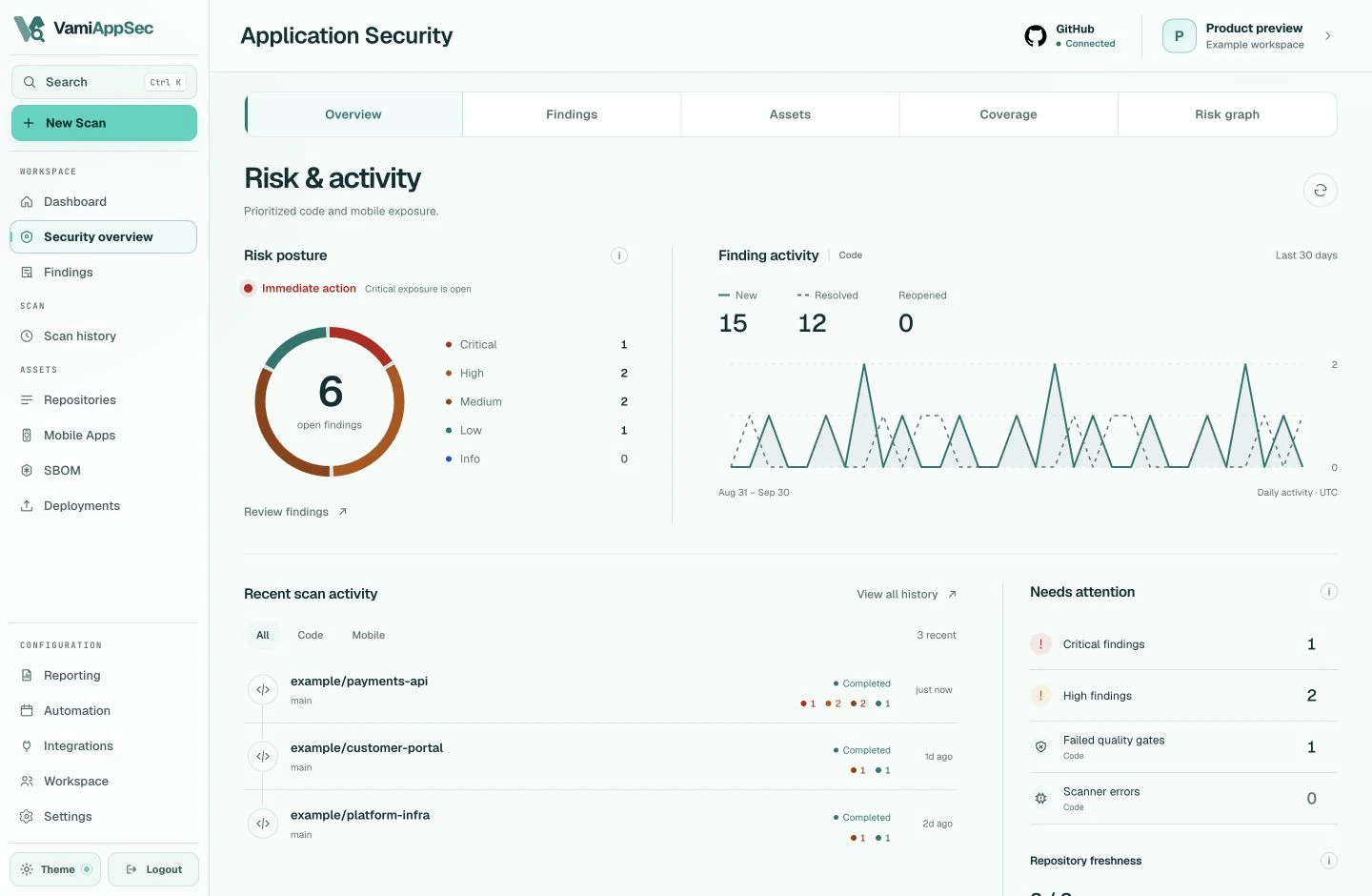
Severity, activity, and coverage.
A shared starting point for review.
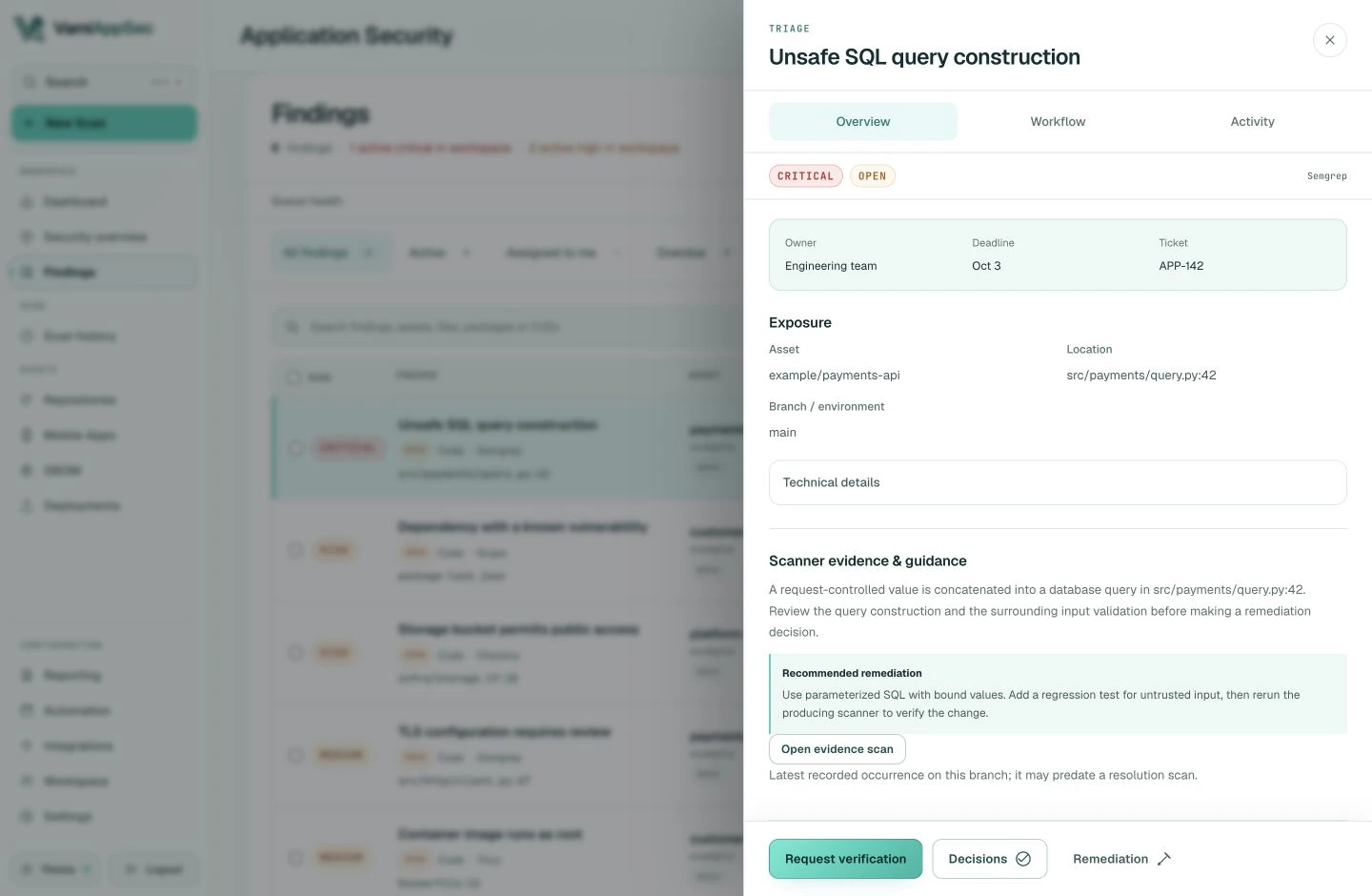
Source context and scanner guidance
stay together in the review.
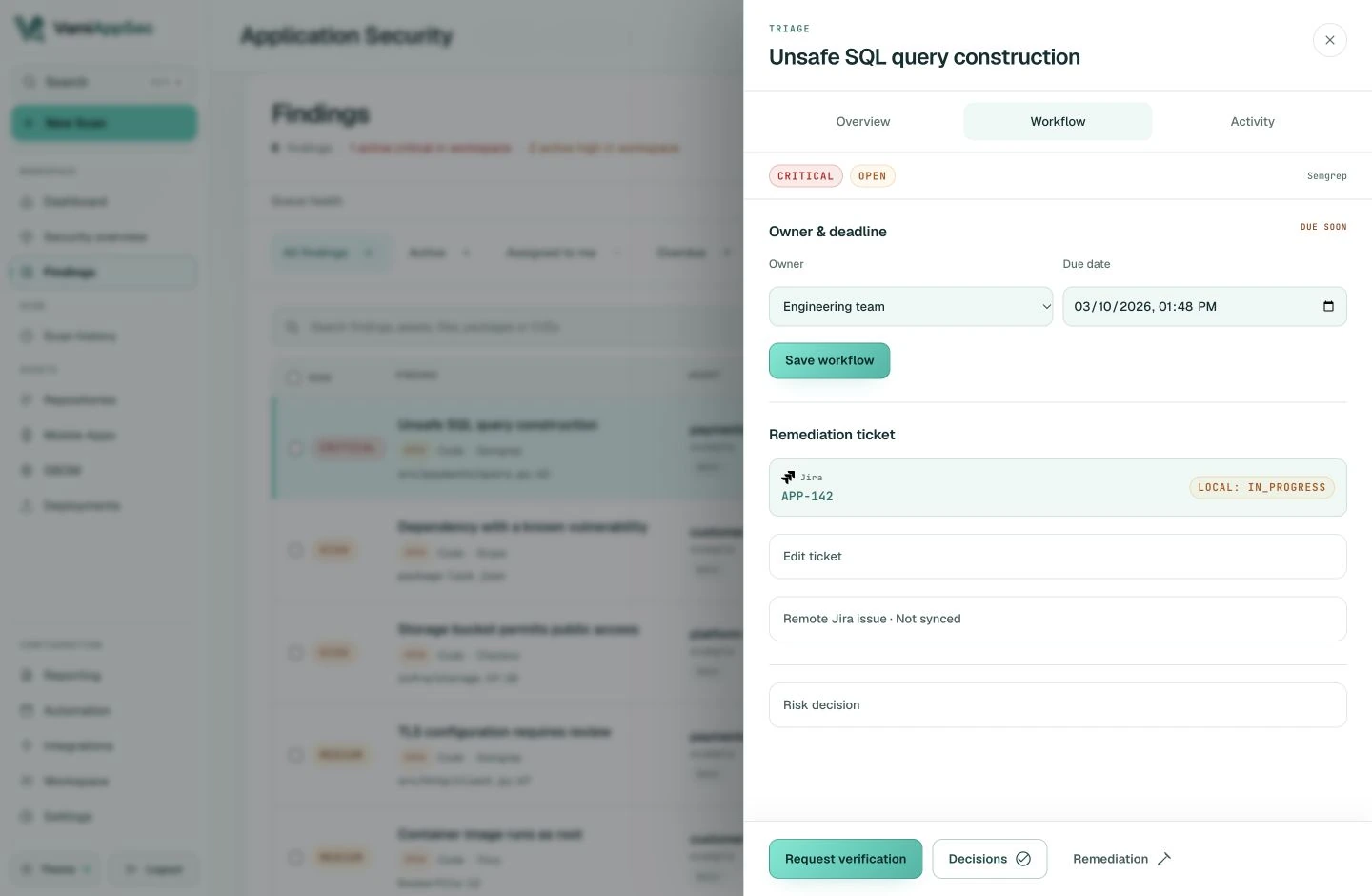
Carry context into a Jira issue
and keep the review traceable.
 Jira issue handoff
Review severity, activity, and coverage together. Find the issues that need attention, then follow their evidence before deciding what ships.
Open a finding to review the affected asset, file location, scanner evidence, and remediation guidance. The original context stays within reach.
Assign an owner and deadline, create or link a Jira issue, and keep the local workflow visible. Review the fix and verify it with the relevant checks.
Normalize related findings while keeping their original evidence within reach.
See which policy was evaluated, what triggered it, and whether the assessment was complete.
Code-aware guidance helps engineering understand what to change and why. Your team reviews and approves the action.
Security context travels with the work. One clear thread from assessment to remediation.
Define the repository, branch, artifact, and owner. Start with a clear assessment boundary.
A known starting pointRun the relevant engines. Keep findings, execution status, and coverage in one reviewable record.
Evidence in contextReview the evidence and apply your policies. Identify the findings that affect the release.
An explainable decisionAssign an action, review the guidance, and rescan. Preserve the evidence of what changed.
A traceable resolutionCode, dependencies, secrets, infrastructure, and mobile artifacts. Bring their security signals into the same conversation.
Start with your applicationFind risky code patterns and keep the file, line, and technical context ready for review.
Inventory dependencies, map known vulnerabilities, and carry the bill of materials with the release.
Identify exposed secrets, review their scope, and make rotation an explicit next action.
Bring infrastructure configuration and container policy into the application risk picture.
Review mobile static analysis and supported dynamic evidence together. Keep indicators distinct from verified runtime behavior.
Your repository. Your issue tracker. Your team channels. Bring security context to the tools your people already use.
 One security context.Across your workflow.

Repository context
Issue handoff

Channel alerts

Team notifications

Signed events

Security notifications
On the roadmap
 GitLab Coming soon
 Azure DevOps Coming soon
 Jenkins Coming soon
 AWS Coming soon
Fit application security into the way your organization works, with deployment choices, role-based access, and a reviewable evidence trail.
Let's talk about your environmentUse SaaS or operate within infrastructure you control.
Tenant separation, roles, and Microsoft Entra SSO.
Technical and executive reports from the same findings.
AI guidance remains advisory and subject to review.
Bring your application. Let's put its security picture into focus.